
Textiles have a large impact on the environment, we can minimize that impact with our choices.
I wish it was always easy to make responsible choices, that minimize my environmental impact. But some of the textiles that are used in performance wear are not environmentally friendly, and there are no clear correct choices. My goal is to find the best functional solutions, that make the smallest environmental impact. The fashion design program opened my eyes to some of the issues regarding textiles and their impact. I have used this information to guides my steps in creating my business mission, vision and values. I want to create clothing and gear solutions while reducing the waste and negative impact they might have on the world. Not all my choices are perfect, but I try hard to be intentional and aware of options to get the best functional solution for the lowest impact with the information I have.
The more I learned about sewing and the fashion industry, the more curious and concerned I became about textiles. Through classes and research, I discovered the huge environmental impact of textiles. The fashion industry has created an unsustainable system that prioritizes profit over responsibility. This system, known as “fast fashion,” produces cheap clothing quickly and not to last. People wear these items only a few times before replacing or discarding them, creating waste and harming both the environment and the workers who make them.
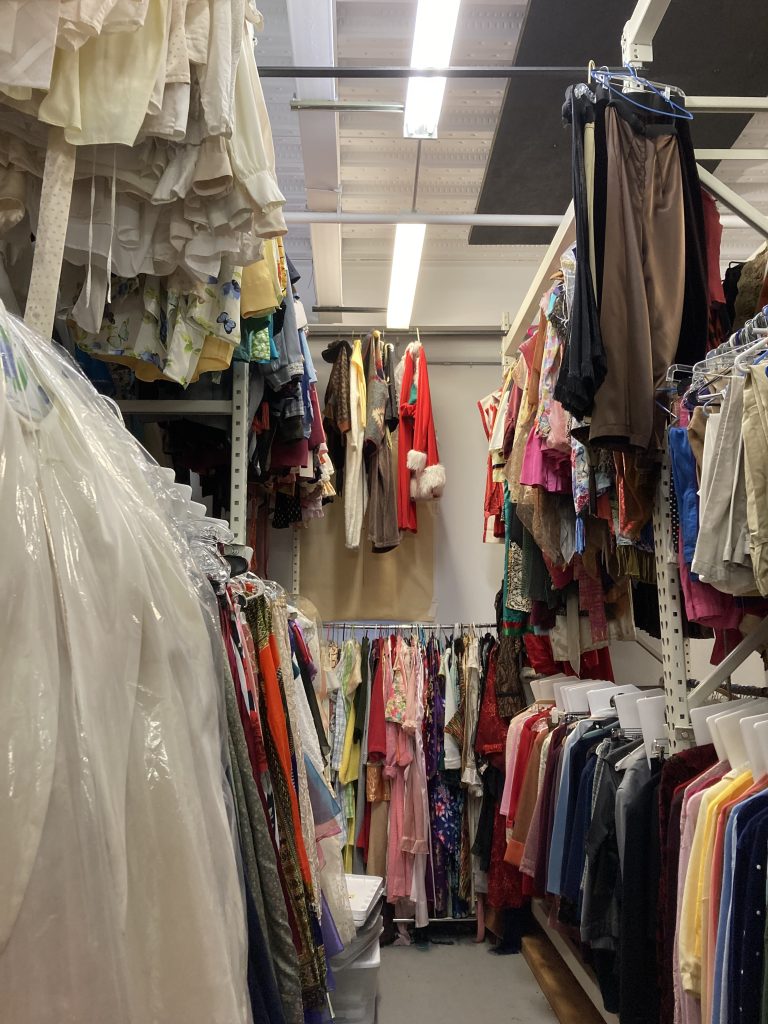
Mass produced clothing that is only meant to be worn a few times has a huge impact on the environment, especially synthetic textiles that don’t breakdown in nature.
Natural Fibers
All fibers have some environmental impact, but they are not created equal. In a very short summary there are two main classes of fibers: Natural and Manufactured. Natural fibers include things like cotton, linen, silk and wool. They break down in nature and decompose after they are no longer useful in textiles. Producing natural fibers into cloth has its own environmental impact, but that’s another blog.
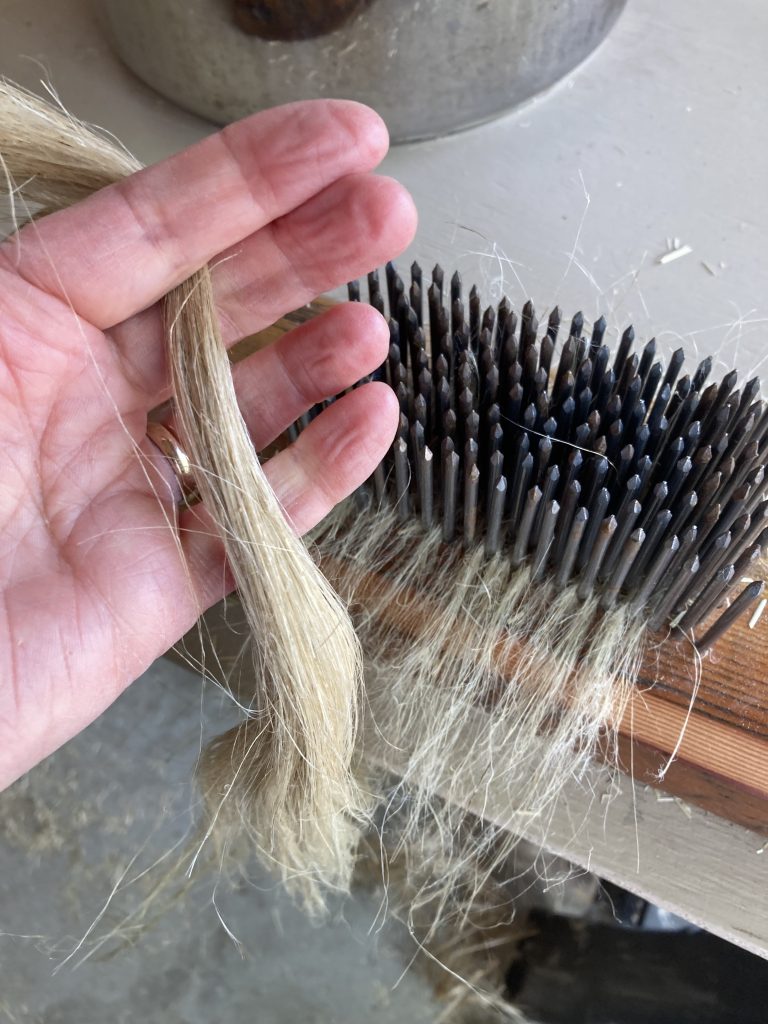
Natural Flax fiber being processed
Manufactured Fibers
Manufactured fibers are a little more complicated and have a few more categories, but the biggest category is the synthetics, things like polyester and nylon. These fibers don’t break down in nature. Think about that for a second. So, If I buried my grandmother’s lime green polyester pant suit from 1967 in the back yard and went out and dug it up today, it would still be there. It would be yucky (okay it was always a little yucky), but it would still be there. When I was a little kid in the 60’s and 70’s almost everything I wore had some polyester in it. Polyester was washable and it didn’t need ironing. It kept my mom from having to go to the cleaners. Synthetic fibers come from petroleum products, they are basically a form of plastic. Most were developed in my grandparents life time.
If I buried my grandmother’s lime green polyester pant suit from 1967 in the back yard and went out and dug it up today, it would still be there.
Textile impact on Environment
The technologies keep improving, and the fibers are much nicer to wear now compared to that horrible lime green outfit. But, the fibers still don’t break down. If you start to think about all the mass of the clothes that don’t break down on a global scale that waste becomes shocking and overwhelming. Over 85% of all textiles have a linear life span: they are made, they are worn, and then they are discarded; not recycled, up-cycled or reused in anyway. They end up In landfills and are often burned to decrease their mass (burning plastic – you know the smell). They also end up as micro-plastics. Over 70% of micro-plastics found in waterways come from fibers, i.e. synthetic textiles.
However, the world’s population has more than doubled in my lifetime and all those people need clothes. Synthetic fibers are relatively cheap and can be mass produced. They also have functional properties we want, especially in performance gear that natural fibers don’t. In short we need synthetic fibers, they provide very important and useful features that we rely on, but at an environmental cost.
Most of my running gear is made from polyester. Why do we run in fabrics that is made out of plastic? In short, it’s practical and works better than most other fibers for the task.
I’ve come up with a lot more questions than answers, and I’m still learning. I hope you find the blogs entertaining and fun, kinda geeky and educational too. I’m hoping it will raise some awareness and encourage better choices, but I’m not here to judge or “greenwash”. I might not use formal citations in each post, but I will always attempt to separate out facts from opinions and if I find good sources I will link them.
I do believe we need to treat our clothes more like true friends vs followers.
Instead of massing a huge wardrobe, we need to avoid the throw-away one use items and mend and repair the items that really mean something to us. I want to offer practical solutions for your old race shirts; both the one you never liked and the one that represents a true achievement.
Feedback
If you have questions, thoughts, or feedback, please leave a comment. You’ll need to enter your email to comment, but I won’t sell your information—and honestly, I don’t have time to spam you anyway.
Back to Sustainability Index
Return to Home Page