
Please leave any feedback, questions, or comments regarding Heidi Garner Gaiters here. We look forward to hearing from you. Or you can email me directly.
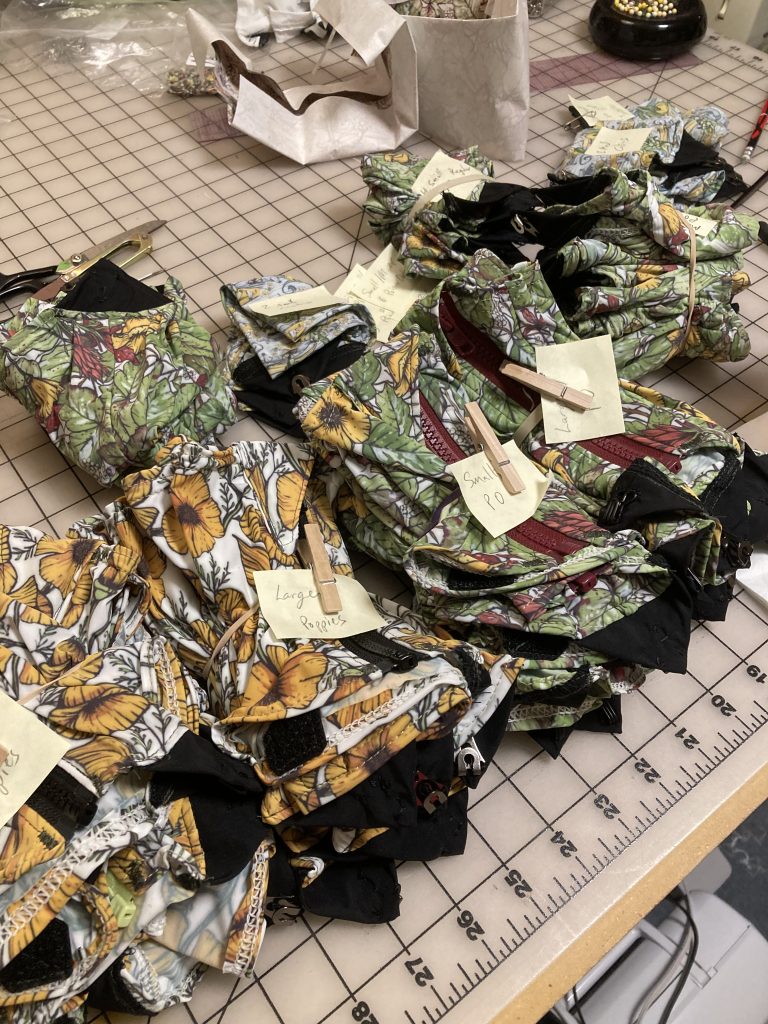
Getting ready to package up the finished Gaiters.
Please leave any feedback, questions, or comments regarding Heidi Garner Gaiters here. We look forward to hearing from you. Or you can email me directly.
Getting ready to package up the finished Gaiters.
Deadstock fabric is one way to improve sustainability and address the environmental impact of textiles. It’s also something Achievement Repair and Gear uses often. In simple terms, it’s fabric that is no longer wanted for its original purpose or buyer. Instead of going to waste, small quantities of this fabric are made available to makers like us. That allows us to create unique products—but once the fabric is gone, it’s gone.
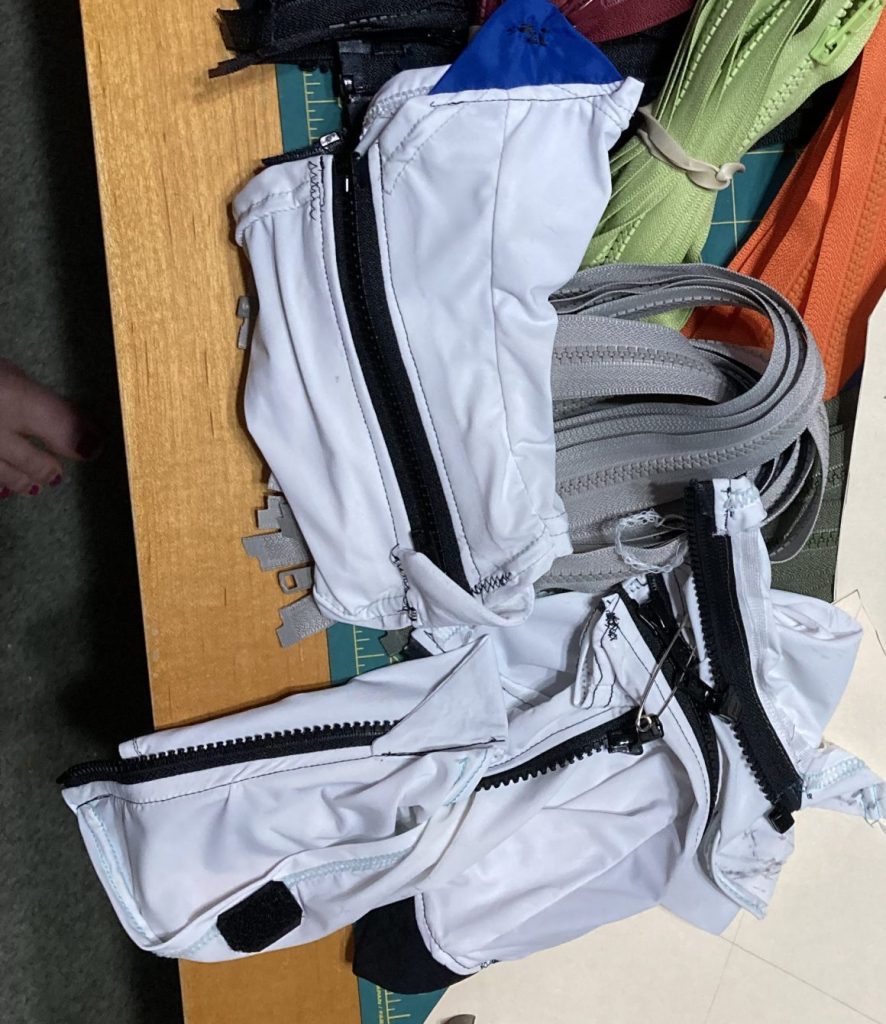
Our Heidi Garner gaiters are made from white deadstock fabric, pictured here before it is printed with her artwork.
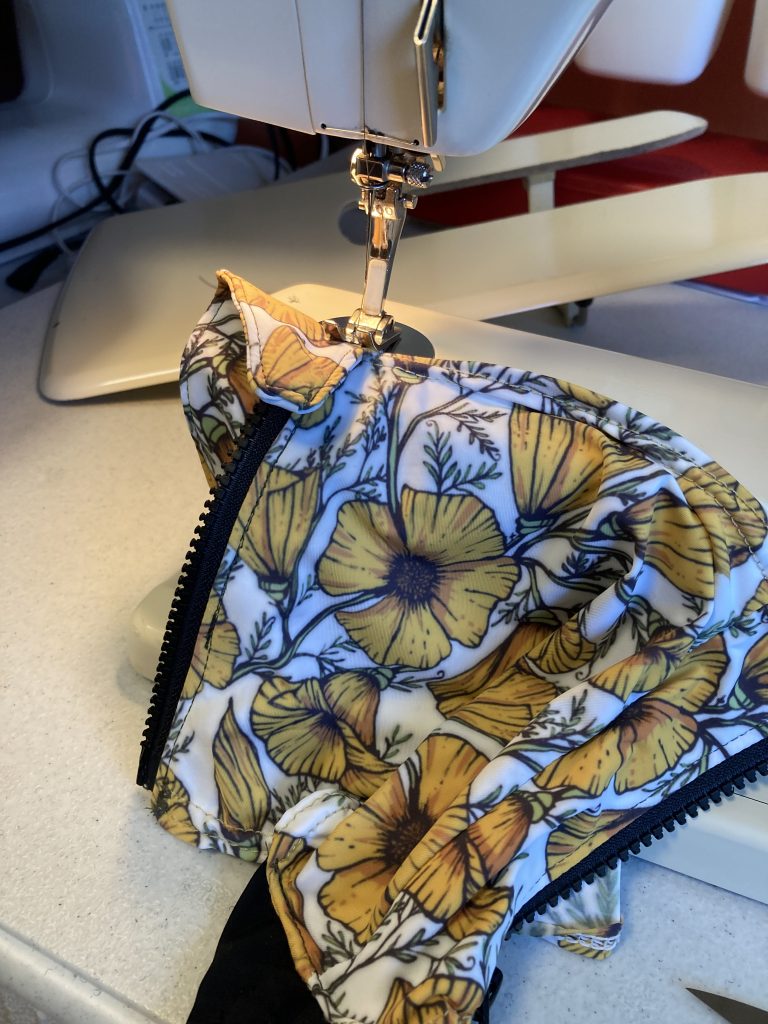
This is the same fabric after printing.
Rather than rewriting what’s already been said well, I’m linking below to a great article that explains what deadstock fabric is and why it’s a more sustainable option:
🔗 Unraveling the Mystery: Deadstock Fabric
https://blog.fabrics-store.com/2024/08/29/unraveling-the-mystery-deadstock-fabric/
At Achievement Repair and Gear, we don’t like to see things go to waste. While we do occasionally order new specialty fabrics for specific performance needs, we always try to source materials from existing resources first.
Deadstock fabric from small, family-owned dealers—often called jobbers—is one of our first choices. Beyond that, we look for other creative ways to lower environmental impact. That includes sourcing hand-me-down fabric and supplies from things like estate sales, thrift stores, and one-off situations (like race shirts from events canceled during the pandemic)
We also focus heavily on repair and upcycling whenever possible. Maybe your old race shirt becomes a pocket for a jacket that didn’t come with one. Maybe it turns into a new pair of gaiters. We get creative—but because of how we source materials, these items often can’t be duplicated later.
For more information, check out the article “What Is Deadstock Fabric and Is It Sustainable?” by Good On You. It does a good job of laying out some basic principles we try to follow, like:
Use what you already have
Choose secondhand when possible
Purchase high-quality products from ethical brands using lower-impact materials (recycled or not)
Take care of your garments and use them for as long as possible
Dispose of items thoughtfully
You can read the full article here:
🔗 https://goodonyou.eco/brands-using-leftover-fabric/
If you have questions, thoughts, or feedback, please leave a comment. The comment tab is up by the title of the blog. You’ll need to enter your email to comment, but I won’t sell your information—and honestly, I don’t have time to spam you anyway. Or email me directly.
Hopefully if you’re reading this, you’ve already picked up a pair of Heidi Garner Gaiters and want to learn more about them.
Heidi is part of my local running community, and when she learned that I was building a small business focused on trail-running gear and repairs—with an emphasis on sustainability—she took a chance on me. We collaborated to produce small batches of gaiters featuring her custom artwork.
One of my goals is transparency: I want you to know what you’re getting, how it’s made, and why certain materials were chosen. I’d also love your feedback on the product – please feel free to leave a comment below.
The fabric used is K-DEER Athletic White Micro Nylon Spandex. It is moisture-wicking, breathable, and feels cool and almost weightless against the skin. You may even forget you’re wearing gaiters at all.
This lightweight fabric is ideal for hot environments, because it allows heat to escape instead of trapping it like heavier fabrics can.
For best results:
Avoid a hot dryer —heat will break down the fibers and significantly shorten the life of your gaiters.
While the fabric itself can handle a delicate wash cycle, the gaiters include a large hook that can snag other items in your laundry. For longevity, it’s best to rinse them in the sink or shower and hang them up to dry.
Heidi Garner Gaiters are made from deadstock fabric (see blog post: What Is Deadstock Fabric). Each pair is sewn in small batches by me, either in my home studio—or sometimes at my kitchen table.
The fabric was sourced from Surge Fabric, a small, family-owned business based in Lebanon, Missouri. They specialize in sourcing deadstock fabric from designers.
Based on my research, K-DEER was a U.S.-based yoga-wear brand that closed after supply-chain issues during the pandemic. I initially purchased just six yards of this fabric—the total available at the time. Later, I was able to acquire another fifteen yards, but once this fabric is gone, it’s gone.
If you love the cool, lightweight, ultra-soft feel of these gaiters, I recommend grabbing another pair while they’re available—they won’t be around forever. Available soon at https://heidigarnerstudio.com
If you own a pair I want your feedback. Please leave a comment or email me directly. I really want to hear from you, and I stand behind my work. Don’t worry, I respect your privacy and I won’t sell your information—and honestly, I don’t have time to spam you anyway.
I had an amazing semester to end 2025 and was so busy with school the website was neglected and I made zero progress on starting the business. However, I’m hoping to push forward on both of those areas in 2026. I have started adding blog posts and will be working on a collaborative project in the next few weeks. I plan on building content and start working on products in the next few months.
If you have questions, thoughts, or feedback, feel free to leave a comment. The comment tab is up by the title of this blog (I didn’t design the layout). You’ll need to enter your email to comment, but I won’t sell your information—and honestly, I don’t have time to spam you anyway.
Why don’t we run in cotton T-shirts? Apparently Pam Smith did when she won the 2013 Western States 100 Endurance Run. So why don’t I?
We can run in cotton, and at times in the past we did, but lets take a look at the properties of cotton and see why most running shirts are now made out of synthetic fibers, mainly polyester.
Cotton is a short staple natural fiber. “Staple” is the term used when the length of the fibers that make up the yarn are relatively short. Staple length fibers are measured in inches vs filament length that can be kilometers. A cotton boll produces fibers that are only a few inches long. They are spun together to make the yarn that is used in T-shirts. Cotton is naturally absorbent and breathable, which feels great against the skin when dry. However, cotton loves to absorb and hang onto that water. It stays wet. Therefore, when we sweat it holds onto that sweaty funk. It can also mold easily. So simply, we don’t run in cotton t-shirts because they become damp stinky sponges which can lead to chafing.
However, if you are looking for something to help cool you off in a hot dry environment, you can use cotton for evaporative cooling. A cold wet t-shirt can dissipate significant heat. Be aware wet fabric on skin tends to chafe, so protect yourself from chafing. Choose a shirt that doesn’t rub, and use a lot of lube where it does touch the skin. A pre-frozen, ice soaked t-shirt worn strategically for a few hours can be a lot nicer than the pre-used sponge in the ice water bucket from the aid station. However, it’s going to feel damp and sticky eventually, which isn’t nice. Pack a back up tech shirt to change into when this happens.
How to get the funk out of cotton: hot water. Cotton fibers wash and dry really well, they are stronger when wet, and once they are preshrunk, they can take very hot laundry temperatures which can kill the funky smell bacteria. Cotton can mildew if left rolled up in your gear bag. Once cotton has a case of mildew, it might never come out. Cotton fibers can also handle bleach well, but the dyes that are frequently used to color cotton don’t. The basic (high pH) properties of bleach breaks the bonds where the dye attaches to the fiber and you are left with bleach stained white spots that won’t go away.
I like to make responsible choices, that minimize my environmental impact of the textiles I work with. I also like to sew and use the right textiles for the job at hand. While getting my fashion design certificate I learned quite a bit about the textile industry and fibers, I am not an expert, but I want to share what I have learned and what I want to continue researching better options. My goal is to find the best functional solutions, that make the smallest environmental impact. The information I have on textiles guides my steps in creating my business mission, vision and values. I want to create clothing and gear solutions while reducing the waste and negative impact they might have on the world. Here I will give you a little textile 101 education, some basic background on what some of the issues are, and how I came to learning about them. Then I will talk about steps I want to take in the future and elude to future posts.
The more I learned about sewing and the fashion industry, the more curious and concerned I became about textiles. Through classes and research, I discovered the huge environmental impact of textiles. The fashion industry has created an unsustainable system that prioritizes profit over responsibility. This system, known as “fast fashion,” produces cheap clothing quickly and not to last. People wear these items only a few times before replacing or discarding them, creating waste and harming both the environment and the workers who make them.
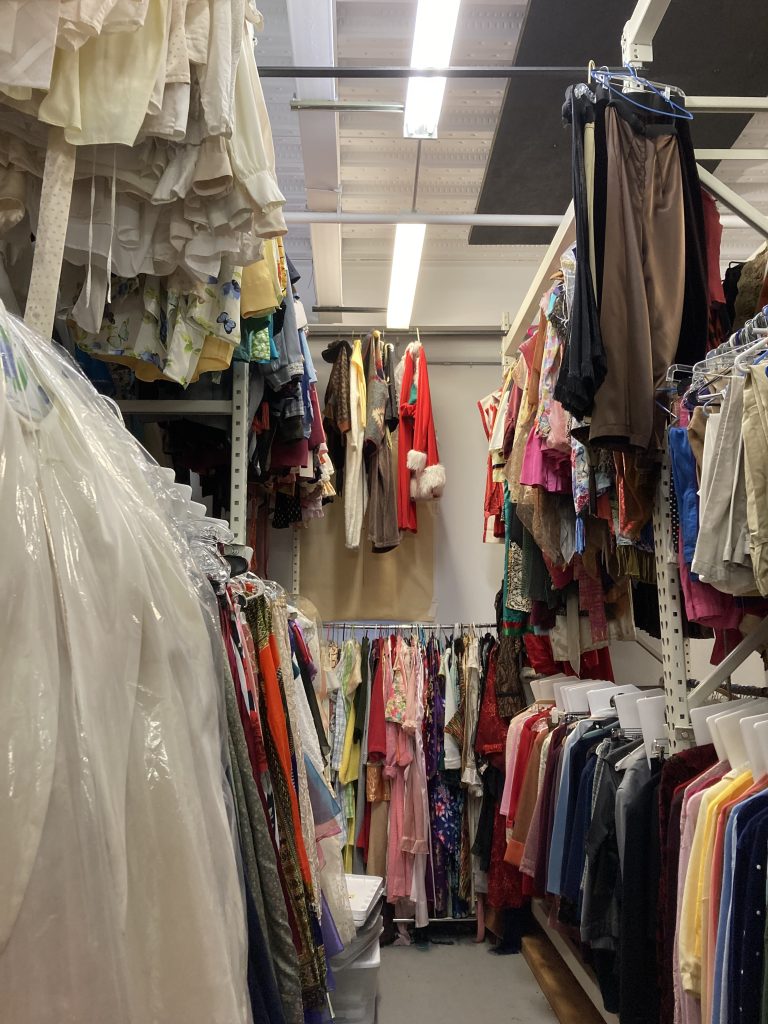
clothing storage
All fibers have some environmental impact, but they are not created equal. In a very short summary there are two main classes of fibers: Natural and Manufactured. Natural fibers include things like cotton, linen, silk and wool. They break down in nature and decompose after they are no longer useful in textiles. Producing natural fibers into cloth has its own environmental impact, but that’s another blog. We will also be talking about the properties of these fibers in future blogs.
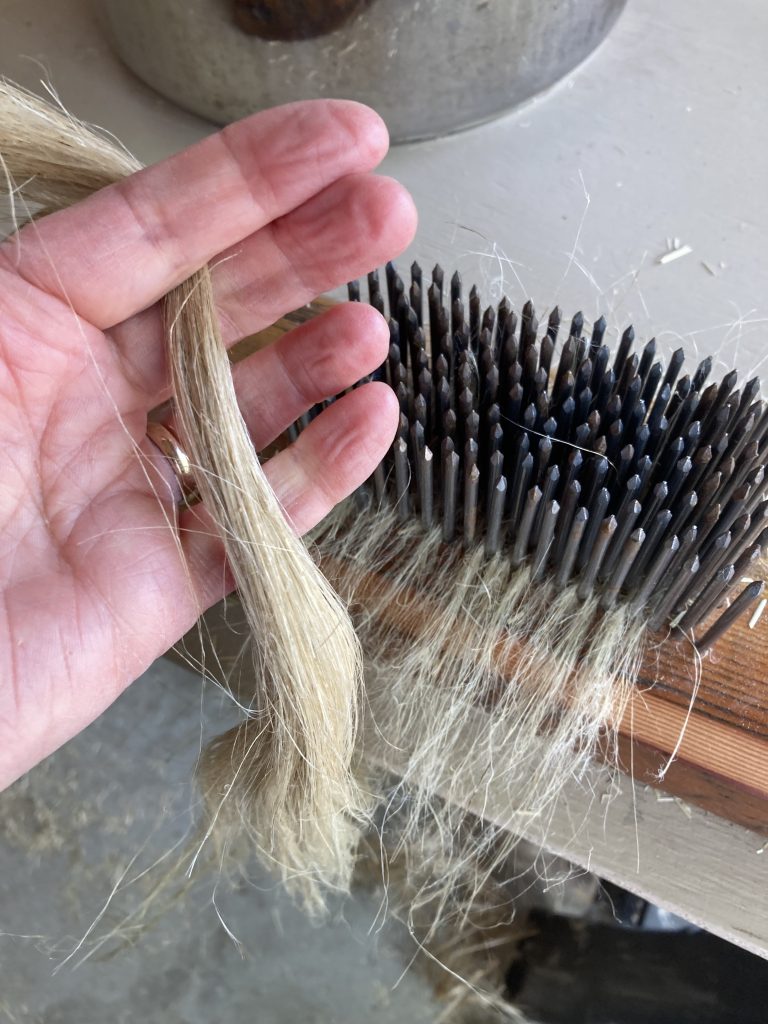
Natural Flax fiber being processed
Manufactured fibers are a little more complicated and have a few more categories, but the biggest category is the synthetics, things like polyester and nylon. These fibers don’t break down in nature. Think about that for a second. So, If I buried my grandmother’s lime green polyester pant suit from 1967 in the back yard and went out and dug it up today, it would still be there. It would be yucky (okay it was always a little yucky), but it would still be there. When I was a little kid in the 60’s and 70’s almost everything I wore had some polyester in it. Polyester was washable and it didn’t need ironing. It kept my mom from having to go to the cleaners. Synthetic fibers come from petroleum products, they are basically a form of plastic. Most were developed in my grandparents life time.
If I buried my grandmother’s lime green polyester pant suit from 1967 in the back yard and went out and dug it up today, it would still be there.
The technologies keep improving, and the fibers are much nicer to wear now compared to that horrible lime green outfit. But, the fibers still don’t break down. If you start to think about all the mass of the clothes that don’t break down on a global scale that waste becomes shocking and overwhelming. Over 85% of all textiles have a linear life span: they are made, they are worn, and then they are discarded; not recycled, up-cycled or reused in anyway. They end up In landfills and are often burned to decrease their mass (burning plastic – you know the smell). They also end up as micro-plastics. Over 70% of micro-plastics found in waterways come from fibers, i.e. synthetic textiles. That being said, the world’s population has more than doubled in my lifetime and all those people need clothes. Synthetic fibers are relatively cheap and can be mass produced. In short we need synthetic fibers, they provide very important and useful features that we rely on, but at an environmental cost.
I’ve come up with a lot more questions and I don’t have solid answers for all of them yet, I’m still learning. The blogs will start with what I already know, I hope you find them entertaining and fun, kinda geeky and educational too. I’m hoping it will raise some awareness and encourage better choices, but I’m not here to judge or “greenwash”. I might not use formal citations in each post, but I will always attempt to separate out facts from opinions and if I find good sources I will link them.
Instead of massing a huge wardrobe, we need to avoid the throw-away one use items and mend and repair the items that really mean something to us. I want to offer practical solutions for your old race shirts; both the one you never liked and the one that represents a true achievement.
If you have questions, thoughts, or feedback, please leave a comment. You’ll need to enter your email to comment, but I won’t sell your information—and honestly, I don’t have time to spam you anyway.
Hello World! was our first post on our brand new website. We started the site May 27, 2025.
I have a ton to learn about navigating the programs and building the website. I’m literally pushing buttons and seeing what they do at this point, but I have a vision and I hope you check back as I make slow steady progress (I could add an ultra analogy here).
I retired about a year ago and went back to school to work on my fashion design certificate. I have at least a class or two each semester until at least the end of 2026 before I’m done. In the meantime, I’m slowly learning how to start the business and do all the other tasks I need to know. Not sure when I will be officially launching the business, but I’m taking steps toward it every day.